
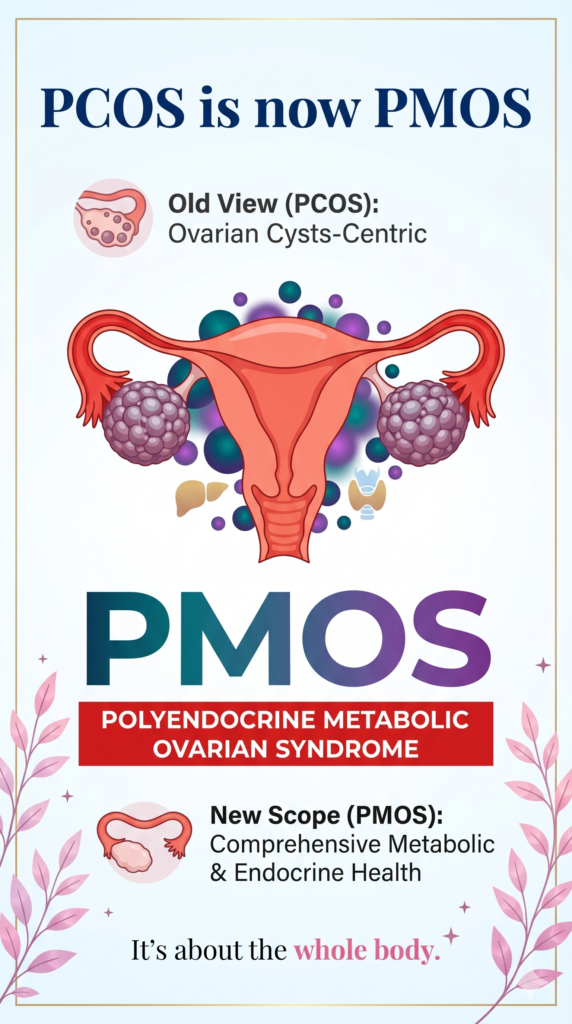
A major global medical update published in The Lancet has officially changed the name of PCOS (Polycystic Ovary Syndrome) to PMOS (Polyendocrine Metabolic Ovarian Syndrome).
This landmark change aims to better reflect the true nature of the condition — which is not just related to ovaries or fertility, but is actually a complex hormonal, metabolic, and endocrine disorder affecting multiple systems in the body.
Why Was PCOS Renamed to PMOS?
For years, experts believed the term “Polycystic Ovary Syndrome” was misleading because:
- Many women with PCOS do not actually have ovarian cysts.
- The old name focused mainly on fertility and ovaries.
- It ignored important metabolic issues like insulin resistance, weight gain, diabetes risk, and hormonal imbalance.
- The name contributed to delayed diagnosis and misunderstanding.
The new name — Polyendocrine Metabolic Ovarian Syndrome (PMOS) — better explains that the condition affects:
- Hormones (endocrine system)
- Metabolism
- Ovarian function
- Overall women’s health
PMOS Is NOT Just a Fertility Problem
One of the biggest misconceptions about PCOS was that it only affects pregnancy or fertility.
Medical experts now strongly emphasize that PMOS is a broader health condition involving:
- Insulin resistance
- Weight management
- Hormonal imbalance
- Skin and hair changes
- Mental health
- Cardiovascular risks
- Reproductive health
Importantly, having PMOS does not mean a woman cannot conceive. Many women with PMOS become pregnant naturally or with proper medical guidance.
Common Symptoms of PMOS
Women with PMOS may experience:
- Irregular periods
- Acne
- Excess facial hair
- Hair thinning
- Weight gain
- Difficulty ovulating
- Fatigue
- Mood changes
Symptoms vary from person to person, making expert gynecological evaluation essential.
Role of Gynecologist & Laparoscopic Hysteroscopic Surgeon
An experienced gynecologist and laparoscopic hysteroscopic surgeon can help diagnose and manage PMOS effectively through:
- Hormonal evaluation
- Ultrasound diagnosis
- Ovulation monitoring
- Fertility counseling
- Lifestyle management
- Advanced minimally invasive procedures when needed
Modern laparoscopic and hysteroscopic treatments help improve reproductive health while ensuring faster recovery and better long-term outcomes.
Final Thoughts
The transition from PCOS to PMOS marks an important shift in women’s healthcare. The new name recognizes that this condition is far more than a fertility issue — it is a whole-body hormonal and metabolic disorder requiring comprehensive care and awareness.
Early diagnosis, lifestyle management, and expert treatment can help women with PMOS lead healthy lives and achieve successful pregnancies confidently.