
Laparoscopy has become one of the safest and most preferred surgical methods in modern gynecology. With improved technology, high-precision imaging, and minimally invasive techniques, its safety has significantly increased in recent years.
In 2025, laparoscopic surgery is now considered the gold standard for many gynecological procedures, replacing traditional open surgery for most cases.
This article explains safety, risks, benefits, recovery, and real facts every woman should know before opting for laparoscopy.
Hear Out From Her Only Her Journey
⭐ What Is Laparoscopy?
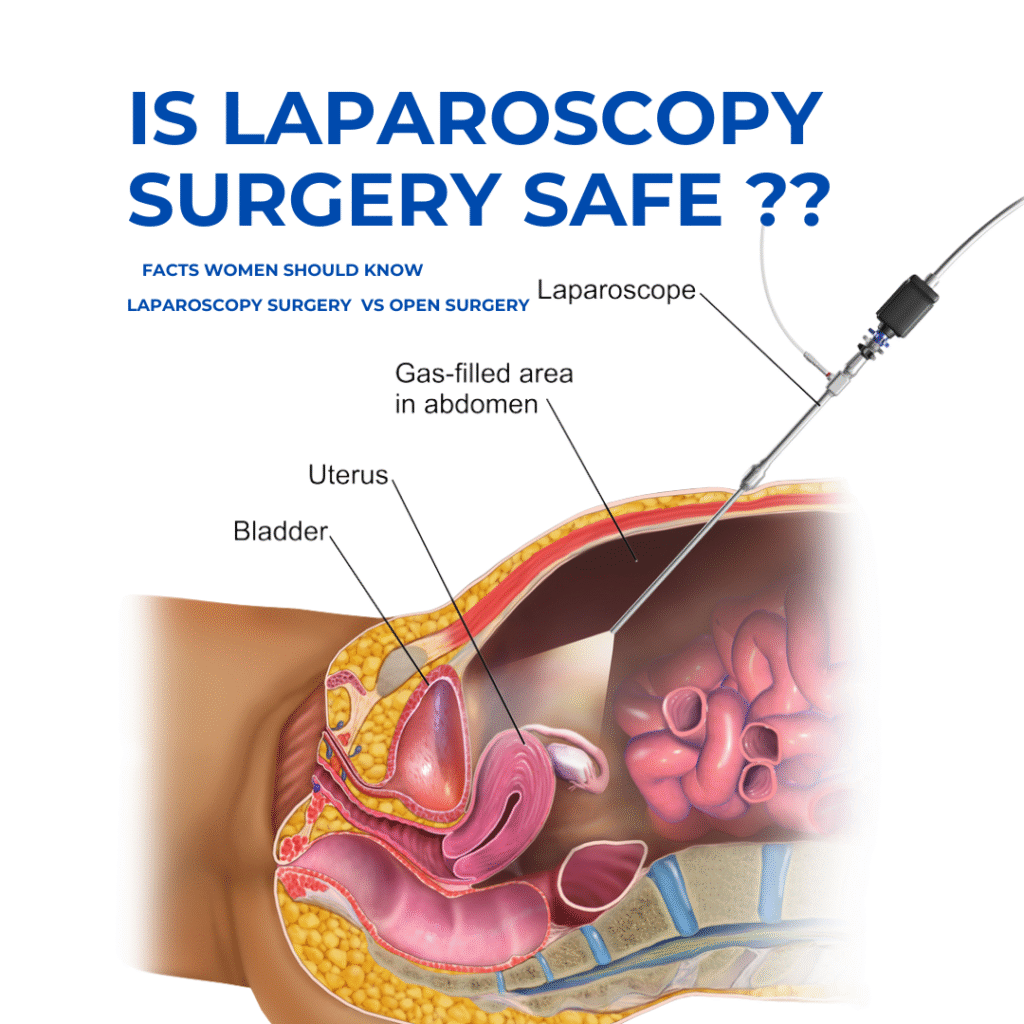
Laparoscopy is a minimally invasive surgery performed through tiny incisions (0.5–1 cm) using a camera (laparoscope) to see internal organs.
It is used to diagnose and treat many gynecological conditions such as fibroids, cysts, endometriosis, infertility, and pelvic pain.
Yes. Laparoscopy is considered very safe for most women.
Global surgical data shows:
- Lower complication rates than open surgery
- Faster recovery time
- Less bleeding
- Reduced infection risk
- Higher precision due to HD/3D visualization
Complications are rare when performed by an experienced surgeon.
Why Laparoscopy Is Safer in 2025 Than Ever Before
✔️ 1. Ultra-HD & 3D Visualization
Surgeons now operate with advanced HD/4K/3D cameras, offering clearer views of organs and increasing surgical precision.
✔️ 2. Smaller Incisions = Lower Risk
Micro-incisions greatly reduce chances of infection and wound complications.
✔️ 3. Better Anesthesia Techniques
Modern anesthesia ensures better monitoring and faster post-surgery recovery.
✔️ 4. AI-Assisted Surgical Planning (2025 Trend)
Many hospitals use imaging + AI support to plan laparoscopic surgeries accurately.
✔️ 5. Expert Gynecologic Surgeons Specializing in MIS
More gynecologists are trained in Minimally Invasive Surgery (MIS), reducing risks.
⭐ Which Gynecological Conditions Can Be Safely Treated with Laparoscopy?
Laparoscopy is widely used in 2025 to treat:
- Uterine Fibroids (Myomectomy)
- Ovarian Cysts
- Endometriosis
- Infertility evaluation & treatment
- Blocked fallopian tubes
- Laparoscopic hysterectomy
- Pelvic pain / pelvic adhesions
- Ectopic pregnancy (selected cases)
It is both a diagnostic and therapeutic tool.
Benefits of Laparoscopy for Women (2025 Evidence-Based)
✔️ 1. Much Faster Recovery
Most women return to normal routine within 5–7 days.
✔️ 2. Minimal Pain
Tiny incisions mean significantly less discomfort.
✔️ 3. Short Hospital Stay
Many procedures are completed as day-care surgeries.
✔️ 4. Very Small Scars
Cosmetic outcomes are far better than open surgery.
✔️ 5. Lower Blood Loss
Reduces need for transfusion and speeds up healing.
✔️ 6. High Accuracy
Surgeons can see even tiny abnormalities inside the pelvis.
What Are the Risks?
Although rare, laparoscopy may have some risks, including:
- Minor bleeding
- Infection
- Reaction to anesthesia
- Injury to nearby organs (intestine, bladder, blood vessels) — very uncommon
- Shoulder-tip pain due to CO₂ gas (temporary)
These are significantly lower compared to open surgery.
⭐ Recovery After Laparoscopy — What Women Can Expect
🕒 Recovery Timeline
- Walk same day
- Back to light work in 3–7 days
- Full recovery in 2–3 weeks
- Exercise after 2–4 weeks (as advised by doctor)
🥗 Diet
Most women can resume a normal diet within hours.
🩹 Wound Care
Small incisions require minimal care; stitches dissolve in many cases.
😌 Pain Level
Usually mild and controlled with simple pain medications.
⭐ How Safe Is Laparoscopy Compared to Open Surgery?
| Feature | Laparoscopy | Open Surgery |
|---|---|---|
| Incision Size | 0.5–1 cm | 8–15 cm |
| Pain Level | Low | High |
| Recovery Time | 5–7 days | 4–6 weeks |
| Infection Risk | Very Low | Higher |
| Cosmetic Result | Excellent | Moderate |
| Hospital Stay | 1 day / Day-care | 3–5 days |
Laparoscopy clearly offers safer, faster, and more comfortable outcomes for most patients.
FAQs — Answering Common Questions
1. Is laparoscopy painful?
Pain is usually mild and lasts 24–48 hours. Most patients feel comfortable after 2–3 days.
2. Is laparoscopy safe for all women?
Yes, for most women. Exceptions depend on medical conditions, which your gynecologist will evaluate.
3. How long does the surgery take?
Typically 30–90 minutes, depending on the condition.
4. Can I get pregnant after laparoscopy?
Yes. In fact, laparoscopy often improves fertility by treating cysts, endometriosis, or blocked tubes.
Laparoscopy is one of the safest, most advanced, and most effective surgical methods available today for women’s health.
With quicker recovery, lower risks, and better outcomes, it is now the first choice for many gynecological conditions.
Advanced & Trusted Laparoscopic Care in Wagholi, Pune – AaShaa Clinic
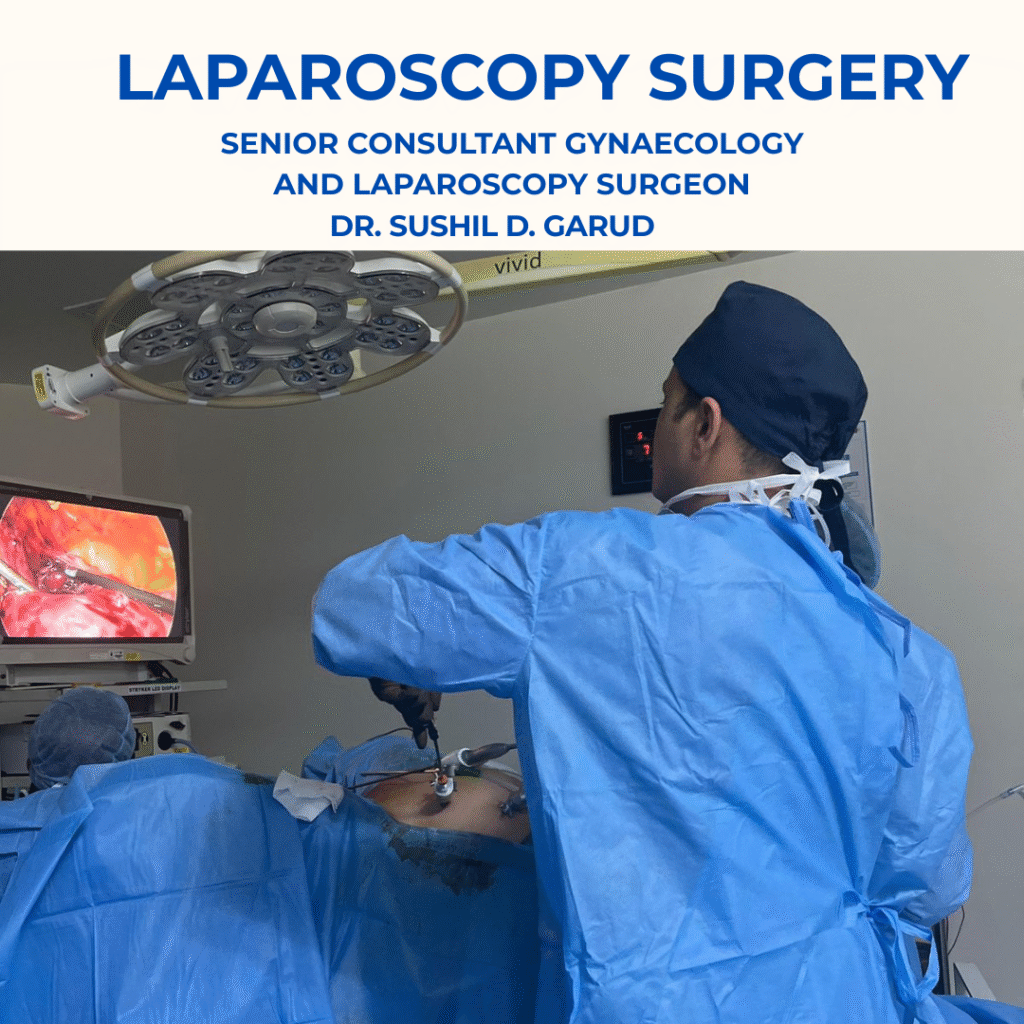
If you are looking for safe, reliable, and expert laparoscopic treatment in Wagholi, Pune, AaShaa Clinic is one of the most trusted centers in the region. Under the guidance of Dr. Sushil Garud (MBBS, DNB OBGYN), the clinic provides advanced women’s healthcare, minimally invasive gynecologic surgeries, and compassionate patient support.
With a focus on accurate diagnosis, advanced laparoscopic techniques, and patient-centered care, AaShaa Clinic ensures women receive the highest level of safety and comfort during their treatment journey.
For any concerns related to gynecology, infertility, or laparoscopic procedures, you can confidently visit AaShaa Clinic, Wagholi, Pune—your trusted partner in women’s health.